Sewer Line Repair in Mount Hope, Bronx
Underground sewer lateral failures, persistent basement waste backups, and invasive root penetrations threaten health, safety, and structural integrity across Mount Hope properties. We offer precise video camera diagnostics, spot excavations, pipe relining assessments, and compliant sewer main repairs.
Navigating Aging Main House Sewers in Mount Hope
Mount Hope’s architectural heritage features handsome multi-story masonry apartment buildings, classic townhomes, and row residences dating from the 1910s to the 1940s. Beneath these foundations lie underground sewer lines originally constructed from extra-heavy cast-iron pipe or vitrified clay tile pipe. Over decades of ground settlement, vibration from nearby subway lines and traffic along Grand Concourse and Tremont Avenue, and aggressive root intrusion from mature street trees, these subterranean channels can fracture, shift out of grade, or suffer internal bottom channel erosion.
Executing dependable sewer line repair Mount Hope Bronx requires precise diagnostics. When raw sewage bubbles up through basement floor drains or multiple fixtures choke simultaneously, routine clearing offers only temporary relief if the pipe has collapsed or lost its pitch. Furthermore, under New York City municipal regulations, property owners are generally responsible for maintaining and repairing the entire house sewer connection running from inside the building wall out to the municipal street main connection point. Our licensed team delivers the technical guidance, camera assessments, and compliant repair strategies necessary to resolve main sewer failures permanently.
Warning Signs of a Failing Main Sewer Line
Identifying main lateral defects before a catastrophic sewage flood damages finished basements or boiler rooms.
Multi-Fixture Backups
When running a washing machine or flushing a second-story toilet causes wastewater to surge up into basement slop sinks or floor drains, the primary building sewer lateral is choked or blocked downstream.
Sewer Gas & Odors in Lower Levels
Continuous foul sewer odors permeating basements, stairwells, or front yards often signify cracked underground sewer piping, dried-out house traps, or separated pipe joints allowing harmful gases to vent unchecked.
Subsidence & Exterior Lawn Indentations
Underground sewer pipe collapses allow escaping wastewater to erode supporting soil. Over time, this creates unexplained depressions in front yards, sunken paving stones, or damp patches near building foundation perimeters.
Root Causes of Sewer Lateral Degradation
Key factors that trigger underground piping failures in Mount Hope’s historic streetscape.
Aggressive Tree Root Infiltration
Vitrified clay pipes contain joint seals made of mortar that degrade with time. Thirsty roots from curbside maples and oaks seek out moisture vapor, penetrating joint cracks and expanding into dense root webs that trap solid waste. While basic drain cleaning provides temporary relief, structural repair is required when roots cause pipe joint dislocation.
Cast-Iron Bottom Channel Deterioration (Channeling)
Decades of acidic wastewater running across the bottom invert of cast-iron house drains cause gradual metal erosion. Over forty to seventy years, the bottom of the pipe wears paper-thin and eventually breaks away entirely, allowing wastewater to discharge directly into the subsoil.
Pipe Sagging, Bellies & Foundation Settlement
Soil compaction, bedrock shifts, or foundation settling can cause sections of underground sewer lateral to sag, creating a low spot or "belly." Solids settle in these dips because gravity water flow loses velocity, creating chronic recurring blockages.
Crushed or Dislocated Street Connections
Heavy street traffic and municipal utility work can shift or fracture the sewer spur where a private building line connects to the city main under the roadway. Accurately locating these issues requires high-precision electronic sonde tracking.
Step-by-Step Sewer Diagnostic and Repair Methodology
From initial high-definition camera analysis to compliant underground engineering.
HD Camera Inspection
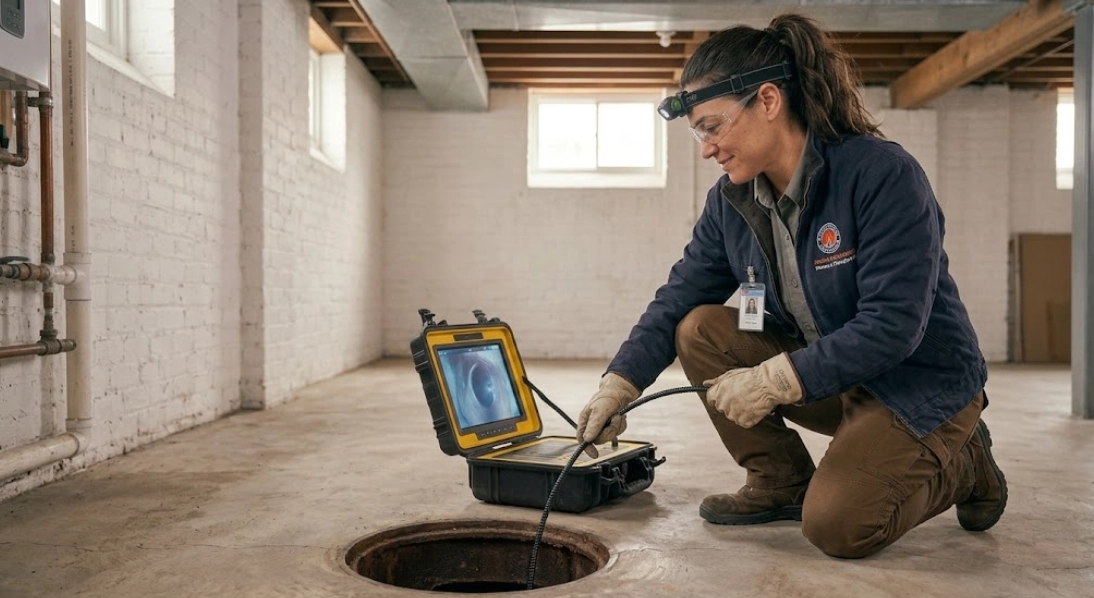
We insert a self-leveling color sewer inspection camera into the building cleanout, transmitting real-time footage of pipe interiors, joints, and root intrusion directly to a high-contrast monitor.
Subsurface Sonde Locating
Using electromagnetic line locators, we detect the camera head’s exact depth and surface position, eliminating guesswork about where the repair or excavation must take place.
Targeted Repair Plan
Depending on structural soundness, we determine whether a localized spot excavation, cured-in-place pipe lining (CIPP), or full lateral replacement to the curb or street is technically appropriate.
Code Compliance & Testing
All underground plumbing modifications comply with NYC Department of Buildings and DEP requirements, verified through final flow verification and air or hydrostatic pressure testing.
Repair vs. Replacement Considerations & Cost Factors
When an underground sewer lateral fails, building owners face the decision between localized sectional spot repair and complete pipe replacement. If a sewer camera survey demonstrates that ninety percent of the lateral is in solid structural condition and the failure is restricted to an isolated root intrusion or cracked fitting near the foundation, a targeted spot repair is frequently the most practical solution.
Conversely, if the entire cast-iron or clay run exhibits extensive channeling, multiple fractures, severe pipe sagging, or heavy scale collapse, continuing to patch individual spots is inefficient. In such cases, full replacement provides decades of peace of mind and protects against catastrophic water damage.
Factors affecting sewer line repair costs include:
- Burial depth and surface surface conditions: Shallow installations beneath dirt yards are far simpler to excavate than deep lines buried eight to twelve feet beneath reinforced concrete sidewalks or public roadways.
- Permitting and city approvals: Work extending past the property line into public street corridors requires NYC Department of Transportation (DOT) and DEP street opening permits and restoration.
- Need for non-invasive detection: When moisture or sewer smells appear indoors without obvious pooling, our leak detection protocols pinpoint concealed seepage lines before unearthing floor slabs.
- Integration with boiler drainage: Commercial boiler blowdown lines and heating condensate drains routinely feed into main building traps. Protecting your heating infrastructure requires coordinating sewer repairs with your primary boiler repair in Mount Hope system requirements.
Urgent Safety Notice: Raw Sewer Backup Precautions
Raw sewage contains pathogenic microorganisms, hazardous bacteria, parasites, and flammable or toxic gases such as hydrogen sulfide and methane. If a building sewer overflows into your basement or living quarters:
- Do not enter contaminated standing water: Submerged electrical panels, heating systems, or extension cords pose extreme electrocution hazards.
- Cease all water usage immediately: Instruct all occupants and building units to stop flushing toilets, running sinks, or operating washing machines until the blockage is resolved.
- Ventilate safely without recirculating: Open exterior windows to vent toxic vapors, but avoid running central heating systems that pull contaminated air into upper apartment units.
- Avoid direct contact: If wastewater touches skin, wash thoroughly with antibacterial soap. Call our emergency response team at (315) 202-8009 immediately for dispatch.
Frequently Asked Questions About Sewer Line Repair
Clear, direct answers regarding sewer line maintenance and NYC municipal regulations.
Who is responsible for repairing a damaged sewer lateral in New York City?
In New York City, property owners are generally responsible for maintaining and repairing the entire house sewer connection from the building foundation out to the connection point at the municipal sewer main in the street, including the curb line and sidewalk section, subject to applicable municipal rules and circumstances.
How does a sewer camera inspection pinpoint underground pipe problems?
A specialized fiber-optic sewer camera equipped with an integrated sonde transmitter is fed through the building cleanout. As it travels down the pipe, it provides real-time high-definition video of cracks, tree roots, sagging bellies, or joint offsets, while an above-ground locator precisely marks the exact depth and surface location.
Can recurring basement drain backups indicate a fractured sewer main line?
Yes. When multiple floor drains, laundry sinks, and toilets in the lowest level of a building back up simultaneously—especially during heavy rains or when upper units discharge wastewater—it strongly indicates a main lateral obstruction or pipe fracture rather than an isolated fixture clog.
What causes tree root intrusion into vintage vitrified clay sewer lines in Mount Hope?
Older sewer pipes in the Bronx frequently utilized vitrified clay tiles sealed with mortar or tar. Over decades, tree roots seek moisture and nutrients through microscopic mortar fractures, expanding inside the pipe into dense root balls that trap solids and cause complete structural blockages.
Serving Mount Hope & Surrounding Bronx Neighborhoods
Prompt, expert sewer lateral response across West Bronx transit corridors.
Drain Cleaning
Heavy-duty cabling, grease removal, and internal scale clearing for sluggish interior waste stacks and secondary plumbing branches.
Leak Detection
Non-destructive moisture tracking, electronic acoustic detection, and pressure diagnostics for concealed water lines.
Boiler Repair in Mount Hope
Professional steam and hot-water heating repairs, burner troubleshooting, and annual heating safety inspections.
Available throughout Mount Hope, Tremont (west), Grand Concourse, University Heights, and surrounding Bronx areas. Review our Service Areas page for complete geographic details.